
How commercial projects benefit from specialist furniture logistics
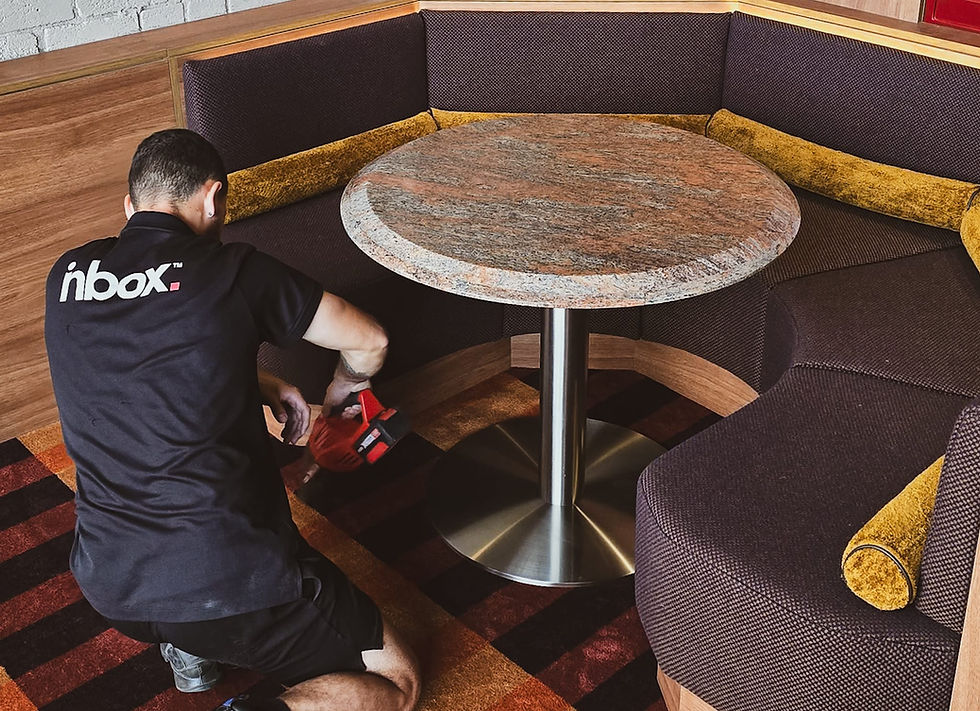
Commercial projects involve far more than furniture delivery.
Whether it's an office fit-out, hotel opening, display suite, retirement living project or hospitality venue, furniture often represents the final stage of a much larger project.
By the time furniture arrives, construction schedules are tight, stakeholders are under pressure and deadlines are approaching.
A delayed delivery, damaged product or missing item can create significant disruption.
This is why many project teams rely on specialist furniture logistics providers.
Furniture logistics helps create structure, visibility and coordination throughout the project lifecycle.
The result is a smoother installation process and greater confidence that furniture will arrive when and where it is needed.
Why furniture logistics matters in commercial projects
Commercial projects are rarely simple.
A typical project may involve:
Multiple suppliers
Hundreds of furniture items
Staged deliveries
Site access restrictions
Strict project deadlines
Multiple stakeholders
Without strong logistics coordination, projects can quickly become difficult to manage.
Furniture logistics provides the systems and processes required to keep projects organised.
Commercial projects involve multiple suppliers
One of the biggest challenges in commercial projects is coordinating inventory from different suppliers.
A project may include:
Workstations
Boardroom furniture
Reception furniture
Hospitality seating
Decorative items
Outdoor furniture
Each supplier may have different production schedules and delivery dates.
Without coordination, project sites can become overwhelmed by multiple deliveries arriving at different times.
This often creates unnecessary complexity.
Project consolidation creates order
Project consolidation is one of the most valuable logistics services for commercial projects.
Rather than delivering products directly to site as they arrive, inventory is first received into a central location.
Products are:
Received
Identified
Stored
Organised
Managed
Once everything is ready, a coordinated installation can take place.
This reduces confusion and creates a more structured project delivery process.
Furniture warehousing provides flexibility
Commercial projects rarely progress exactly as planned.
Construction schedules change.
Site access may be delayed.
Installation dates may move.
Furniture warehousing provides flexibility by allowing inventory to remain protected until the project is ready.
This helps avoid situations where furniture arrives before site access is available.
It also reduces the risk of products being damaged while stored on active construction sites.
Quality checks help prevent installation problems
Few things disrupt a project more than discovering damaged or incorrect furniture on installation day.
A furniture quality check helps identify issues before products reach site.
Quality checks may include:
Unpacking
Inspection
Photography
Product verification
Reporting
This allows project teams to address issues before they affect the installation schedule.
Inventory visibility improves project planning
Commercial projects often involve significant furniture volumes.
Project teams need visibility into:
What has arrived
What is still outstanding
What is ready for installation
What remains in storage
Accurate inventory information helps project managers make informed decisions.
Without visibility, planning becomes much more difficult.
Site congestion can become a major problem
Active project sites are busy environments.
Builders, contractors and suppliers often compete for limited space.
Multiple furniture deliveries can create:
Traffic congestion
Storage issues
Scheduling conflicts
Safety concerns
Coordinated furniture logistics helps reduce these problems by controlling when and how inventory arrives.
Staged deliveries support project schedules
Not all furniture needs to arrive on the same day.
Many projects benefit from staged delivery programs.
For example:
Level 1 installation
Level 2 installation
Common area installation
Final styling and presentation
Furniture logistics providers can coordinate these stages to align with project requirements.
This creates a more efficient installation process.
Interstate projects require additional coordination
Many commercial projects operate across multiple cities.
Inventory may need to move between:
Melbourne
Sydney
Other project locations
Interstate furniture logistics allows inventory to be transferred while maintaining visibility and control.
This is particularly valuable for national brands, hospitality groups and multi-site projects.
White-glove delivery improves presentation
Commercial projects are often judged by the final result.
Furniture delivery plays a major role in achieving that outcome.
White-glove delivery may include:
Placement
Unpacking
Assembly
Positioning
Packaging removal
The objective is to leave the project ready for handover rather than simply delivering products.
This creates a more polished and professional outcome.
Furniture assembly reduces project complexity
Many commercial furniture products require assembly before they can be used.
Examples include:
Workstations
Boardroom tables
Seating systems
Storage units
Hospitality furniture
Professional assembly services help ensure products are installed correctly and ready for immediate use.
This reduces the need to coordinate additional contractors.
Hospitality projects have unique challenges
Hotels, restaurants and hospitality venues often operate under strict opening dates.
Delays can affect:
Revenue
Staff training
Marketing campaigns
Guest bookings
Furniture logistics helps hospitality projects maintain momentum by providing greater coordination and visibility.
When opening dates cannot move, logistics becomes even more important.
Office fit-outs rely on coordination
Modern office projects often involve large volumes of furniture arriving over a relatively short period.
Without careful planning, installations can become chaotic.
Furniture logistics helps support:
Delivery scheduling
Inventory management
Assembly coordination
Project staging
This creates a smoother transition from construction to occupancy.
Why project managers prefer one logistics partner
Every additional supplier creates another communication channel.
Commercial projects often involve enough complexity already.
Working with one furniture logistics partner can provide:
One point of contact
Centralised communication
Better visibility
Greater accountability
This reduces administrative workload and simplifies project management.
The hidden cost of poor logistics
Poor logistics can create costs that are not immediately visible.
These may include:
Installation delays
Additional labour
Site disruption
Product damage
Re-deliveries
Extended project timelines
Many project teams discover that investing in proper logistics planning saves money over the course of the project.
Why specialist furniture logistics matters
Commercial furniture projects are not simply transport exercises.
They require:
Planning
Coordination
Visibility
Communication
Product protection
Specialist furniture logistics providers understand these requirements and build systems specifically around them.
This helps reduce risk and improve outcomes.
Final thoughts
Commercial projects involve significant coordination between suppliers, contractors, project managers and stakeholders.
Furniture logistics helps bring structure to that complexity.
Through services such as furniture warehousing, project consolidation, quality checks, interstate logistics, white-glove delivery and furniture assembly, project teams gain greater control over the final stages of the project.
Because successful projects rely on more than great design and construction.
They also rely on great logistics.